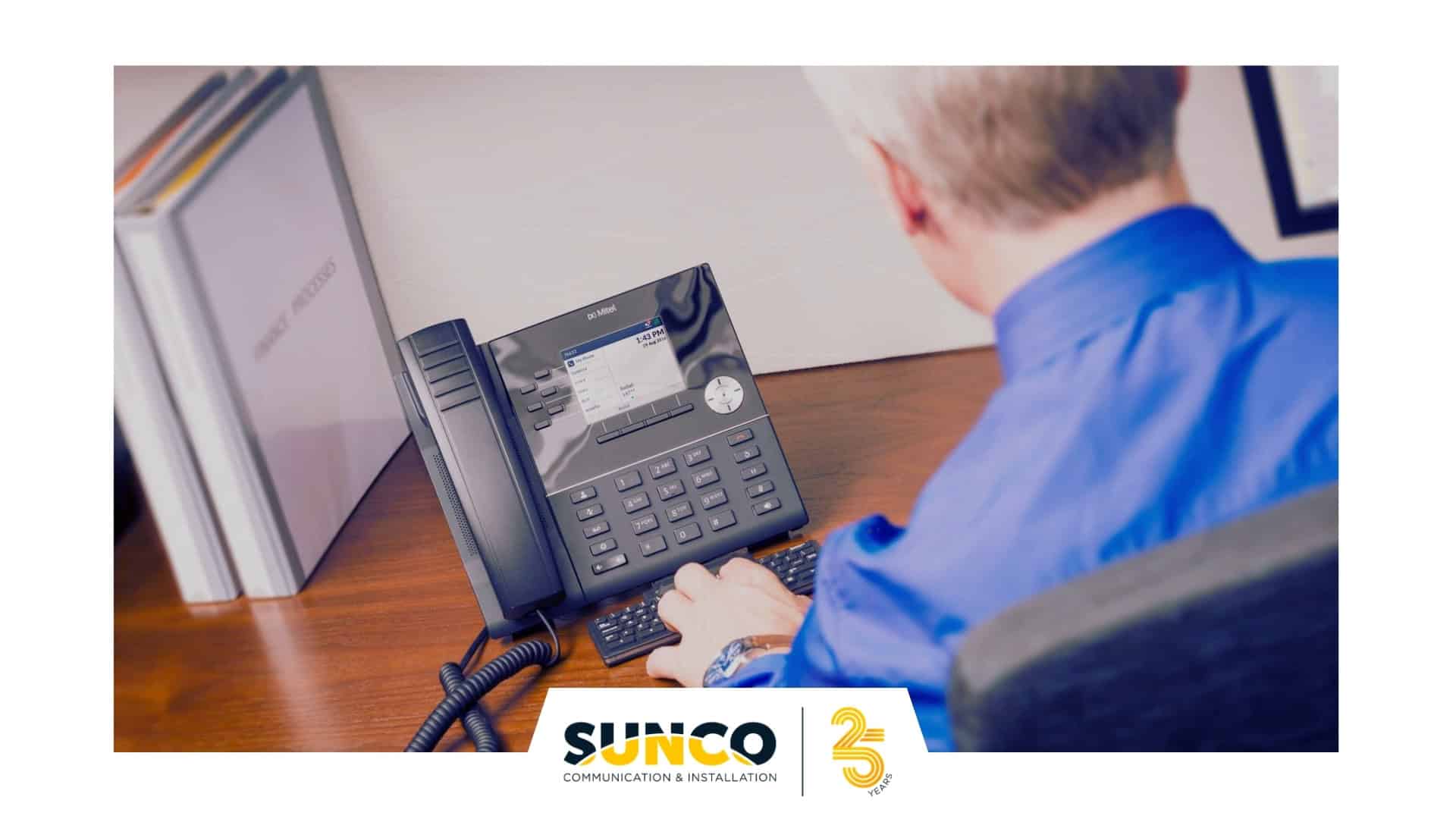
A cloud-based VoIP system with a softphone app on every laptop and phone is the standard answer in 2026. It works anywhere there is an internet connection, costs less than traditional landlines, and gives every employee one business number that rings on their desk phone, laptop, and mobile device at the same time. For a distributed team, this removes the old dependency on a physical office phone system entirely.
How a cloud phone system works
Traditional phone systems rely on physical equipment sitting inside an office. Cloud systems move that equipment into a secure online environment, so calls travel over the internet instead of copper lines.
Each employee gets an extension that can ring a desktop app, a mobile app, and a physical desk phone at once. A call can start on a laptop at home and move to a mobile app in the car without the caller noticing a change, and a new hire in a different city can be set up in minutes instead of waiting for a technician to run a physical line.
What should be included as standard
A modern cloud phone platform should include features that help employees communicate efficiently while giving businesses better visibility into customer interactions.
Common features include:
- Voicemail sent directly to email
- Business texting from the company phone number
- Automated attendants that route callers without requiring a receptionist
- Call queues for customer service and sales teams
- Call recording for training, compliance, and quality management
- Mobile and desktop applications for employees working from different locations
- Analytics that show call volume, wait times, missed calls, and team performance
- Integration with tools such as Microsoft Teams and customer relationship management platforms
These features help businesses create a consistent customer experience while giving leaders better information about how their teams communicate.
Cloud VoIP vs Traditional Phone Systems
| Feature | Cloud VoIP System | Traditional Phone System |
| Remote work support | Built into the platform | Limited flexibility |
| Employee mobility | Calls follow users across devices | Often tied to office phones |
| Adding new users | Usually completed quickly | Often requires hardware changes |
| Maintenance | Managed remotely | More onsite support required |
| Business integrations | Supports modern applications | Limited integration options |
| Scalability | Designed for business growth | Requires more planning and equipment |
For organizations with employees working in multiple locations, cloud phone systems provide a more flexible foundation than older phone technology.
What happens to fax lines, alarm panels, and door entry systems
These older devices often still need a phone line, and most can move onto a digital line or a cellular backup rather than staying on legacy copper. A good provider inventories every device connected to your current phone lines before cutover, so nothing gets missed, since these are the systems that cause quiet, expensive problems when they are overlooked during a switch.
What happens to existing desk phones
Many current IP desk phones are reusable on a new cloud system, depending on the make and model. A trustworthy provider tells you upfront which phones carry forward, and which need to be replaced, rather than defaulting to a full hardware refresh that adds unnecessary cost.
What happens during an internet outage
A properly configured cloud phone system fails over automatically to the mobile app, so calls keep coming in even if the office internet drops. For businesses where phone availability is critical, a secondary internet connection at key sites adds another layer of redundancy so a single outage cannot take the phone system down.
Who benefits most from a cloud phone system?
A cloud phone system is a strong fit for businesses that:
- Have employees working remotely or across multiple locations
- Are replacing an aging phone system
- Need better call visibility and reporting
- Want employees to use one business number from anywhere
- Need integrations with communication and productivity tools
- Want a provider that can support both telecommunications and IT needs
Small and medium-sized businesses can often gain enterprise-level capabilities without managing complex phone equipment internally.
Why this matters
The expensive mistake most businesses make is not choosing the wrong VoIP provider. It is staying on an aging legacy phone system for years past its useful life because switching feels disruptive or risky. That hesitation usually costs more in the long run, through higher monthly line fees, limited flexibility for remote staff, difficulty sourcing replacement parts and a system that cannot support texting, call recording, or integration with the tools a team already uses.
It also tends to show up in less visible ways, such as a customer calling a landline that only rings at an empty desk, or a remote employee missing calls because there was never a clean way to route the office number to their laptop. The businesses that make the switch early tend to find the transition is far less disruptive than they expected, particularly when a provider plans the cutover carefully and maps out every device connected to the old system before anything is turned off.
Frequently asked questions
Is a cloud phone system cheaper than traditional landlines?
Cloud VoIP costs less than traditional landlines and removes the higher monthly line fees that come with an aging legacy system, while adding texting, call recording, and integrations that copper lines cannot support.
Can employees keep one business number across devices?
Yes. Each employee gets an extension that rings a desktop app, a mobile app, and a physical desk phone at once, and a call can move from a laptop at home to a mobile app in the car without the caller noticing.
What happens to fax lines, alarm panels, and door entry systems?
Most of these devices can move onto a digital line or a cellular backup rather than staying on legacy copper. A good provider inventories every device connected to your current phone lines before cutover.
Can existing desk phones be reused?
Many current IP desk phones are reusable on a new cloud system, depending on the make and model. A trustworthy provider tells you upfront which phones carry forward and which need to be replaced.
What happens to phone service during an internet outage?
A properly configured cloud phone system fails over automatically to the mobile app, so calls keep coming in even if the office internet drops. A secondary internet connection at key sites adds further redundancy.
Sunco manages IT support and business phone systems together, which means one provider is accountable for the whole picture instead of a phone vendor and an IT vendor pointing fingers at each other when something goes wrong. Depending on the size of your business, Sunco offers a range of cloud phone options, including Sunco Cloud, hosted on Canadian infrastructure, and Mitel systems for organizations that need a more established enterprise platform. Both options are built to support teams working from a head office, a home office, or somewhere in between, without asking a business to compromise on call quality or reliability. A conversation with Sunco is a reasonable starting point if your team is remote, hybrid, or simply outgrowing an old phone system.