
Mitel for healthcare: How clinics and care facilities use Mitel communications
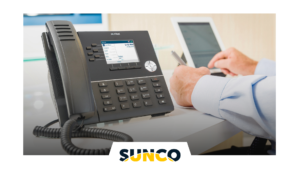
Clinics and care facilities use Mitel to run their phone systems and to connect those phones with the clinical tools staff depend on during a shift. Outpatient clinics usually focus on patient access through call routing and automated appointment reminders, while long term care homes and hospitals add mobile handsets that receive nurse call and alarm notifications directly. Mitel supports organizations ranging from a single clinic to health systems with more than 100,000 users, deployed on premises, in a private cloud or as a hybrid.
Why do healthcare organizations need connected communications?
Citing a widely referenced industry figure, Mitel notes that communication failures play a role in more than 70% of sentinel events in healthcare. An ESG study also found that 66% of healthcare IT leaders believe their clinical staff are juggling too many communication tools. When phones, mobile devices, nurse call and clinical records sit on separate platforms, patients wait longer on hold and staff pass information along by hand, which slows care at every handoff.
Which Mitel capabilities do clinics and care facilities use?
Patient access and contact centre
Mitel CX routes patient calls, texts and chats to the right person and offers callbacks in place of hold queues. Conversational AI can authenticate callers and confirm appointments without involving clinical staff.
Automated reminders
Appointment reminders and refill requests run around the clock, and outreach triggered from the electronic health record helps reduce missed appointments.
Clinical system integration
Open APIs and the CloudLink platform connect Mitel with nurse call systems, electronic medical records and imaging systems. Mitel estimates that attaching patient context to calls saves staff about 43 seconds per interaction.
Mobile handsets for frontline staff
SIP DECT and WiFi handsets keep nurses and care aides reachable anywhere in a building, and Mitel’s H60 DECT headset adds hands free voice commands and push to talk.
Alarm routing and escalation
OpenScape Alarm Response (OScAR) sends nurse call and building alarms to the right mobile staff within seconds and escalates automatically when nobody responds.
Virtual care
Mitel Virtual Care Collaboration Service (VCCS) runs encrypted telehealth visits in a web browser with no download for the patient.
Staff collaboration
MiCollab provides softphone, presence and messaging on desktop and mobile devices, and Mitel calling can also integrate with Microsoft Teams.
How do clinics and outpatient practices use Mitel?
Clinics rely on Mitel mainly for patient access. Auto attendants, call queues, after hours routing and automated reminders keep reception from being overwhelmed, and practices with more than one location can run every site on a single system so staff can transfer a caller or book an appointment anywhere. Call reporting shows peak times and abandoned calls, which helps managers adjust staffing before wait times grow.
How do long term care homes use Mitel?
Care homes use Mitel to connect residents with staff around the clock. Wireless handsets tied to the nurse call system send a resident’s call straight to the assigned care aide, with automatic escalation to the next person if it goes unanswered. Location aware staff safety tools protect employees working alone, and family calls can be routed directly to the right unit.
How do hospitals use Mitel?
Hospitals use Mitel for everyday calling and for critical communications that cannot go down. Mitel Xpert and Mitel Critical Event Management support code team calls, rapid response alerts and dispatch coordination, and hybrid deployments keep clinical calling running on premises if a cloud connection fails. Larger health systems often standardize on one platform so staff moving between facilities can keep the same extension and tools.
Can Mitel keep patient data in Canada?
Yes. Mitel supports on premises and private cloud deployments for organizations that need patient information to stay within a specific jurisdiction. One Canadian provincial healthcare agency consolidated 14 regional phone systems onto a single Mitel private cloud platform with failover between two Canadian data centres, migrating roughly 9,700 users in nine months without interrupting patient services.
Compliance itself depends on configuration. Canadian providers are governed by provincial health information laws such as Ontario’s PHIPA and Alberta’s Health Information Act, with PIPEDA applying in some situations. Mitel describes its solutions as offering common controls that support those obligations, so encryption, access controls and audit trails should be set up from the start.
Frequently asked questions about Mitel in healthcare
Yes. OpenScape Alarm Response connects nurse call systems to Mitel’s communications platform so alerts reach clinical staff on their mobile handsets, with escalation rules configured to match each facility’s staffing model.
Yes. Mitel supports deployments from a single clinic up to health systems with more than 100,000 users, so a practice can start with phones and patient access features and add capabilities as it grows.
Mitel offers a Microsoft Teams integration that lets organizations already using Teams place and receive Mitel calls from the Teams interface.
Mitel Virtual Care Collaboration Service provides browser based video visits with encrypted video and chat, scheduling for staff and rooms, AI transcription and summaries, and optional EHR integration.
Why this matters
In healthcare, a call that goes unanswered or an alert that reaches the wrong person affects patients as well as operations. A communications platform suited to your care setting gives staff fewer systems to manage and gives patients a dependable way to reach care, while keeping health information where it belongs.
Sunco Communication and Installation is a Mitel Specialization Partner for Healthcare with more than 25 years of experience supporting organizations across Canada, including the provincial migration described above. Because Sunco manages IT support and business phone systems together, healthcare teams have one accountable provider when something needs attention.